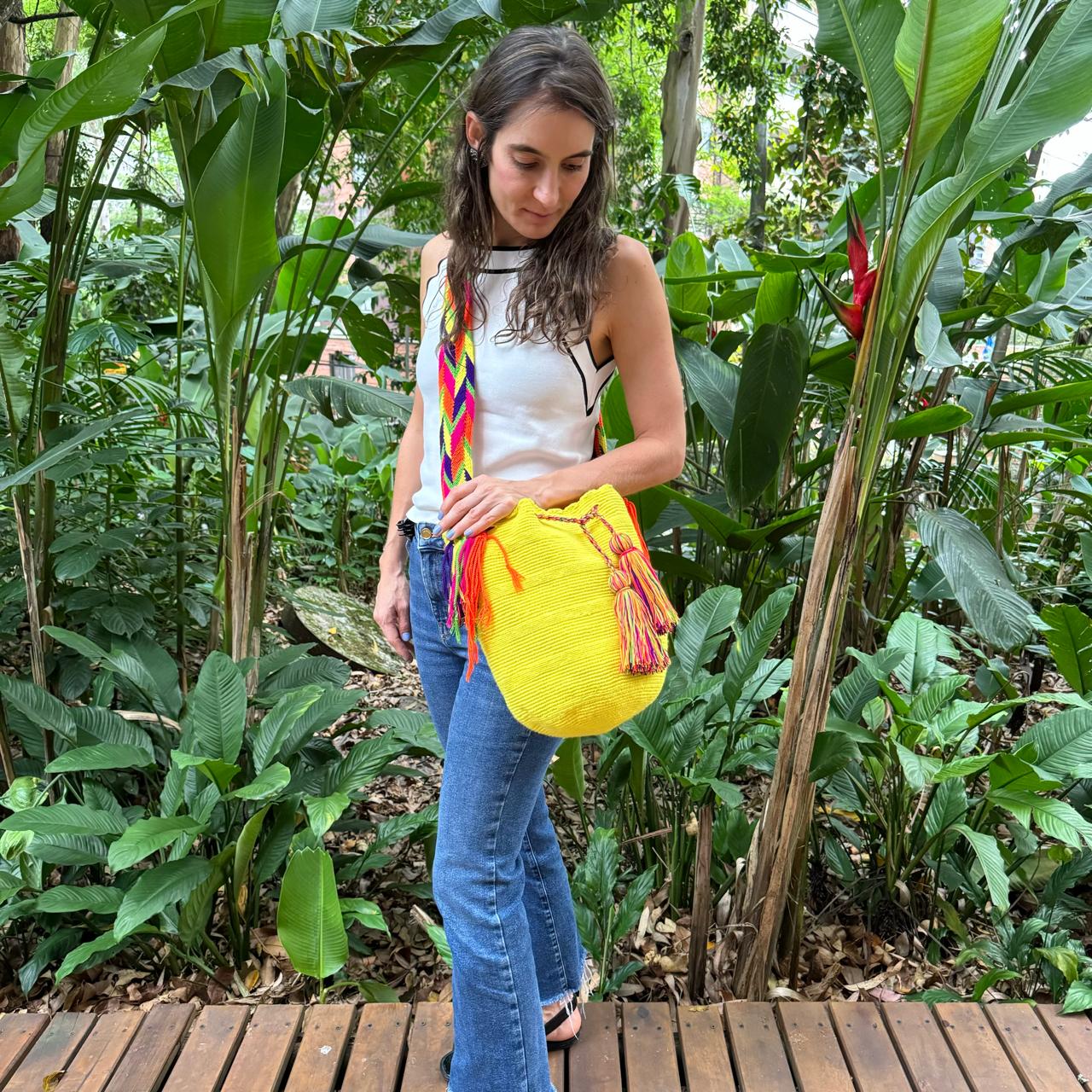
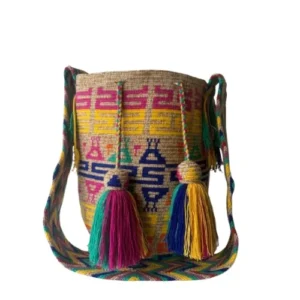
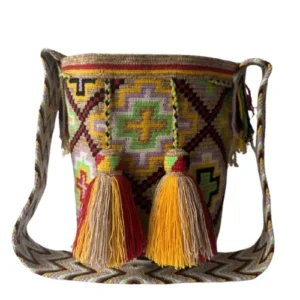
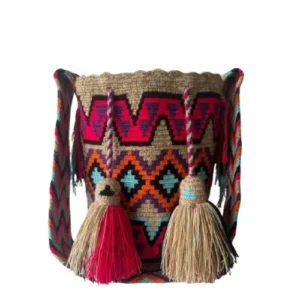
The Wayuu indigenous people live in La Guajira, a desert region in the northernmost part of Colombia, where the Caribbean Sea meets arid landscapes. Known worldwide for their colorful woven bags, the Wayuu are more than artisans; they are a resilient community that has preserved their language, traditions, and worldview for centuries. Understanding their daily life provides insight into how culture and creativity remain alive despite environmental and social challenges.
Daily life of the Wayuu people
The life of the Wayuu communities revolves around family, nature, and community work. Families live in rancherías, small settlements made up of houses built with cactus wood, clay, and palm leaves. Women usually lead the weaving tradition, spending hours crafting mochilas, while men often herd goats, cultivate crops, or engage in trade. Children learn skills and values from their elders, ensuring that knowledge passes from one generation to the next.
Language and oral tradition in Wayuu culture
The Wayuu people speak Wayuunaiki, their native language, which is recognized as part of Colombia’s linguistic heritage. Stories, myths, and lessons are transmitted orally, keeping their cosmology and history alive. Through these narratives, the Wayuu explain natural phenomena, teach moral lessons, and connect younger generations to their identity.
The role of women in Wayuu indigenous culture
Women are central in Wayuu culture. They are not only the primary weavers of mochilas but also key figures in transmitting traditions and maintaining the household. Weaving is more than an economic activity—it is a rite of passage. Young girls are taught to crochet during a stage of seclusion after their first menstruation, where they also learn responsibilities, values, and cultural expectations.
Challenges faced by the Wayuu communities
Despite their resilience, the Wayuu indigenous people face significant challenges. The harsh desert environment makes access to water and food difficult, while modern pressures threaten their traditions. Climate change, limited resources, and social inequality have made their survival even more complex. However, their weaving tradition and cultural pride continue to be a source of strength and global recognition.
Why the Wayuu culture matters today
Learning about the Wayuu people is not only about appreciating their mochilas but also about understanding a way of life built on balance with nature, strong family values, and creativity. Their crafts embody centuries of wisdom, while their language and traditions contribute to Colombia’s cultural richness. Supporting their work means helping preserve one of the most important indigenous identities in Latin America.
If you want to explore authentic products, visit our collection of Colombian Wayuu bags. For direct questions, please contact us.
FAQs
Where do the Wayuu indigenous people live?
They live in La Guajira, in northern Colombia, a desert region along the Caribbean coast.
What language do the Wayuu people speak?
They speak Wayuunaiki, a native language that is still preserved today.
What role do women play in Wayuu culture?
Women are the main weavers and cultural transmitters, passing down traditions through weaving and oral stories.
Are the Wayuu indigenous only known for mochilas?
No. Although their woven bags are world-famous, their culture also includes music, oral traditions, agriculture, and rituals.
What challenges do the Wayuu communities face today?
They struggle with access to resources, climate change, and social inequality, but continue to preserve their identity through resilience and tradition.