If you’ve encountered the word Wayuunaiki, you’re likely seeking a deeper understanding of the language spoken by the Indigenous Wayuu people of northern Colombia and northwestern Venezuela. This isn’t just a language — it’s a living link to one of the most culturally rich and resilient communities in Latin America.
In this guide, we’ll explore what Wayuunaiki is, where it’s spoken, how it works, why it matters, and how you — as a curious reader, conscious consumer, or cultural enthusiast — can support its continued use and celebration.
What Is Wayuunaiki?
Wayuunaiki is the native language of the Wayuu people, an Indigenous group inhabiting the Guajira Peninsula, which spans parts of Colombia and Venezuela. It belongs to the Arawakan language family, the largest and most widely spread language family in South America.
The term “Wayuunaiki” can be translated as “the Wayuu way of speaking.” It’s used by the Wayuu people to refer to their mother tongue — a central part of their cultural identity and daily life.
Where Is Wayuunaiki Spoken?
Wayuunaiki is spoken throughout the Guajira Peninsula — primarily in La Guajira department in Colombia and in Zulia state in Venezuela. Despite increasing urban migration, the language remains robust, especially in rural and traditional communities.
Wayuunaiki is the primary language in Wayuu homes, markets, rituals, and ceremonies. Spanish is often spoken as a second language, but Wayuunaiki remains the dominant means of interpersonal communication among Wayuu people.
A Glimpse Into the Structure of Wayuunaiki
Wayuunaiki has a unique grammatical structure, reflecting a different worldview than that expressed in European languages like Spanish or English. Let’s look at a few features:
Verb-Driven Sentences
Wayuunaiki is a verb-focused language. A single verb may carry the meaning of an entire sentence, including the subject and object. For example, different endings can indicate who is doing what to whom — without the need for separate pronouns or helper verbs.
Use of Postpositions
Unlike English, which uses prepositions (e.g., “in the house”), Wayuunaiki uses postpositions (e.g., “the house in”). This small but significant difference shifts the rhythm and structure of how Wayuu speakers build meaning.
Gender-Neutral Language
Wayuunaiki nouns generally do not indicate gender unless necessary. This makes it a gender-neutral language, contrasting with the heavily gendered structure of Spanish.
Evidential Markers
Wayuunaiki includes linguistic markers to clarify how the speaker knows what they’re saying — whether it’s direct knowledge, hearsay, or inference. This system reflects the Wayuu’s value on truth, transparency, and source of information.
The Cultural Role of Wayuunaiki
Oral Tradition
Wayuunaiki exists primarily as an oral language, passed down through generations via stories, songs, proverbs, and everyday conversation. Elders, known as palabreros, are respected figures who act as mediators and oral historians — preserving the language by teaching it in ceremonial and community contexts.
Myth and Meaning
Many traditional Wayuu stories, told in Wayuunaiki, involve nature, spirits, and ancestral beings. These stories aren’t just entertainment — they teach moral lessons, explain natural phenomena, and guide behavior.
In this sense, Wayuunaiki is not just a language — it’s a repository of culture, encoded with environmental knowledge, spiritual beliefs, and social customs.
Wayuunaiki in Modern Times
Bilingual Education
Both Colombia and Venezuela have implemented bilingual education policies, allowing children to learn in Wayuunaiki during early schooling. However, implementation varies widely, and many schools still lack resources or trained bilingual educators.
Efforts are ongoing to publish more teaching materials in Wayuunaiki and create sustainable education models that don’t replace the language with Spanish but allow both to coexist.
Media and Digital Presence
Wayuu youth are increasingly using social media to share content in Wayuunaiki. From TikTok videos and Instagram posts to YouTube music in Wayuu, the younger generation is helping modernize the language and expand its visibility.
This digital presence is vital to keeping Wayuunaiki relevant in a world dominated by Spanish and English.
Wayuu Craftsmanship: Language in Thread
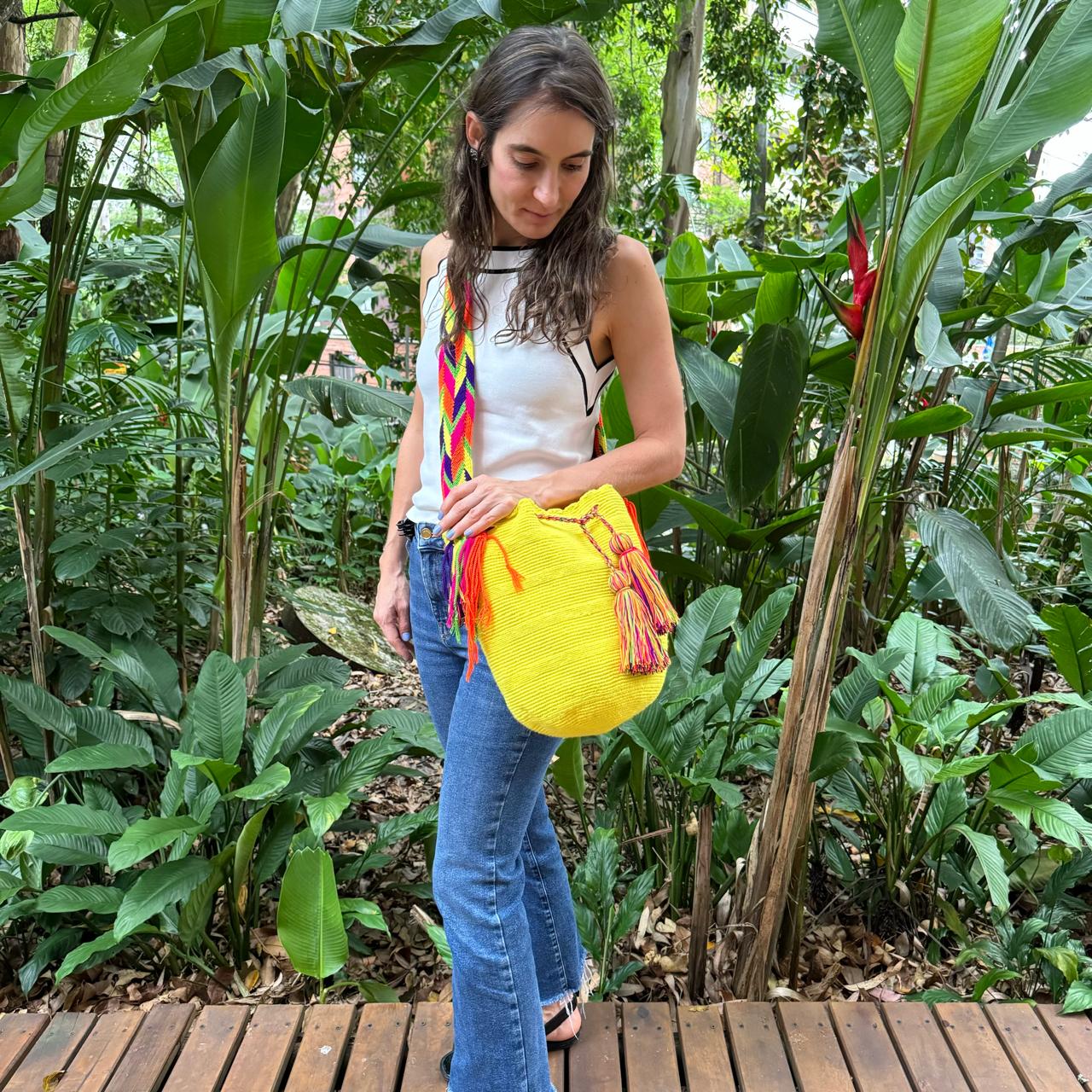
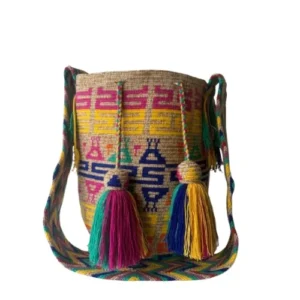
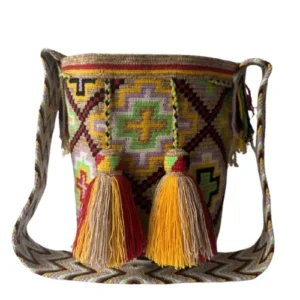
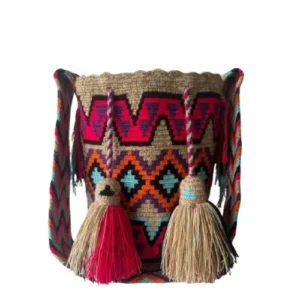
One of the most beautiful expressions of Wayuu culture — and indirectly, of the Wayuunaiki language — is their handwoven mochila bags. These bags are more than colorful accessories; they are woven narratives.
The symbols and patterns often reflect stories told in Wayuunaiki — from ancestral tales to representations of dreams or personal identity. Each bag is handmade by Wayuu women using techniques passed down in their mother tongue.
Ethical Support for the Wayuu Community
While Colombian Native Craft is not part of the Wayuu community, we are proud to collaborate directly with Wayuu artisans through fair trade. By purchasing a Wayuu bag, you help support the women who create them — and by extension, the language and culture they carry.
Every mochila sold at colombianativecraft.com is ethically sourced and handmade, ensuring that profits go back to the communities who sustain this tradition.
Why Preserving Wayuunaiki Matters
Languages are more than tools — they are ways of seeing the world. When a language disappears, so too does the unique perspective it offers.
Wayuunaiki is still alive, but like many Indigenous languages, it faces pressure from urbanization, assimilation, and lack of institutional support. Supporting language preservation is a form of cultural respect and a commitment to diversity.
Even small actions — learning a few words, sharing knowledge, or choosing to buy responsibly — can contribute to keeping Wayuunaiki strong.
Basic Phrases in Wayuunaiki
Want to say hello in Wayuu? Here are a few simple phrases:
- Ajai – Hello
- Kashi – Thank you
- Anashi – Goodbye
- Wane – Water
- Mia – Friend
- Palaa – House
Learning even a handful of words helps build appreciation and connection with the culture behind the craft.
Explore Authentic Wayuu Bags
Looking to own a piece of Wayuu tradition while supporting real artisans?
Our collection of Wayuu bags features 100% handmade mochilas crafted by Wayuu women using traditional weaving methods passed down in Wayuunaiki.
Each purchase supports sustainable income, cultural preservation, and ethical exchange — making your bag not only beautiful, but meaningful.
Get in Touch
Want to learn more about Wayuunaiki, Wayuu culture, or a specific product?
Contact us via WhatsApp and we’ll gladly answer your questions.
Wayuunaiki is the soul of the Wayuu people — a vibrant, living language that deserves recognition, respect, and support. While institutions and policies play a role in its survival, individuals like you can make a difference too.
By learning about Wayuunaiki, supporting Wayuu artisans, and choosing products with purpose, you help preserve a world of knowledge and beauty woven into every word — and every thread.